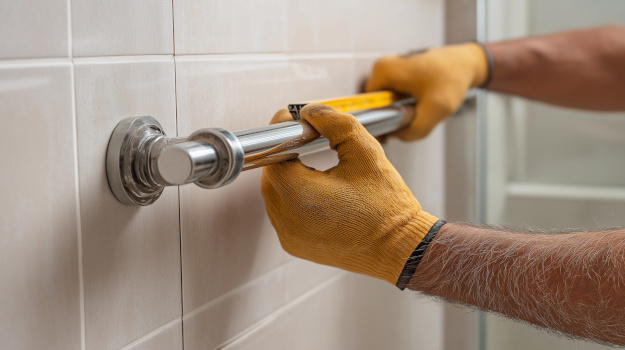
Creating a safe home environment for seniors generally requires reducing fall risks, improving visibility, and adapting spaces to match changing mobility and strength. Most safety improvements focus on flooring, bathrooms, lighting, accessibility, and emergency response, allowing older adults to remain independent while minimizing injury risk.
As our loved ones age, ensuring their living spaces accommodate their changing mobility needs becomes a top priority. A few strategic modifications can significantly reduce the risk of accidents and allow seniors to maintain their independence longer. Here’s a guide to transforming a standard residence into a secure sanctuary for an elderly loved one.
How Can Clearing Floors and Walkways Reduce Fall Risks At Home?
The first priority is removing loose rugs, securing electrical cords, and clearing clutter from all pathways. Falls are the leading cause of injury among seniors, making floor safety the most critical place to start. A home that was once easy to navigate can become an obstacle course for someone with limited mobility or balance issues. The goal is to create wide, unobstructed paths through every room.
Start by assessing the flooring in high-traffic areas. Thick carpeting can be difficult for walkers or wheelchairs to roll over, while slick hardwood can be slippery in socks. Low-pile carpet or slip-resistant flooring is often the best compromise.
Consider these immediate fixes to clear the floor:
- Remove throw rugs – Small unanchored rugs are a major tripping hazard. If carpets are necessary, use double-sided tape or nonslip backing to secure them firmly to the floor.
- Tame the wires – Electrical cords and extension cables should never run across walkways. Coil them behind furniture or use cord covers to keep them flush against the wall.
- Declutter regularly – Remove piles of magazines, shoes, or boxes from hallways and stairs to ensure a clear path for walking.
In the golden years, it’s easier to maintain a high quality of life in a senior-friendly home. One of the most challenging tasks of helping an elderly relative age in place safely and comfortably is researching agencies that provide elderly home care families in Barrie can trust. You can turn to Home Care Assistance for reliable, high-quality in-home care for aging adults. We offer 24-hour live-in care for seniors who require extensive assistance, and we also offer respite care for family caregivers who need a break from their caregiving duties.
How Should You Upgrade Bathroom Safety to Prevent Falls and Injuries?
Install grab bars near the toilet and inside the shower, add nonslip mats, and consider a shower chair for safer bathing. The bathroom is statistically the most dangerous room in the house due to the combination of water, slippery surfaces, and hard fixtures. Modifying this space is essential for preventing serious injuries. Privacy is important, but safety must come first.
Installing grab bars is a nonnegotiable upgrade. Towel racks aren’t designed to support human weight and can rip out of the wall if grabbed during a fall. Instead, install industrial-strength grab bars near the toilet and inside the shower or tub.
Additional bathroom safety measures include:
- Nonslip mats – Place high-quality nonslip mats both inside and outside the shower or tub to provide traction on wet surfaces.
- Shower chairs – A sturdy shower bench or chair allows your loved one to bathe without the fatigue or balance risks associated with standing.
- Raised toilet seats – Adding a raised seat or a safety frame can make standing up and sitting down much easier on the knees and hips.
Why Is Proper Lighting Essential for Senior Safety throughout the Home?
Adequate lighting helps aging eyes see obstacles and edges more clearly, reducing missteps. With age, eyes require more light to see clearly and the ability to distinguish contrast diminishes. Dimly lit rooms or hallways can hide obstacles and increase the likelihood of a misstep. A safe home is a well-lit home.
Review the lighting in every room, paying special attention to staircases and hallways. Replace standard bulbs with higher-wattage, cool-white LEDs that mimic daylight, as these make it easier to see edges and potential hazards.
To improve visibility throughout the home:
- Install night lights – Place automatic sensor lights in hallways, bathrooms, and the bedroom to guide the way during late-night trips.
- Add task lighting – Ensure reading corners and kitchen counters have dedicated bright lighting to reduce eye strain during daily activities.
- Make switches accessible – Consider installing rocker-style light switches, which are easier to operate than traditional toggles, or use smart lights that can be voice-activated.
How Can You Organize Daily Items to Reduce Strain and Boost Accessibility?
Place frequently used items between waist and shoulder height to avoid excessive reaching or bending. Reaching for items on high shelves or bending down to low cabinets can cause dizziness or balance loss. A senior-friendly home organizes essential items so they’re within comfortable reach—ideally between waist and shoulder height.
Reorganize the kitchen and bedroom to ensure frequently used items are easily accessible without the need for a step stool or excessive bending. This applies to everything from coffee mugs and plates to clothing and toiletries.
Strategies for better accessibility include:
- Replace knobs with levers – Doorknobs and round faucet handles can be difficult to grip for those with arthritis. Lever-style handles are much easier to operate.
- Install pull-out shelves – Adding rollout organizers to lower kitchen cabinets prevents the need to crouch and dig for pots and pans.
- Relocate laundry – If the laundry room is in the basement, consider moving the washer and dryer to the main floor to eliminate the need to carry heavy loads up and down stairs.
If you have a loved one who is experiencing cognitive decline due to dementia, he or she may need to be supervised in order to safely complete daily tasks like cooking and doing laundry. Aging in place can present a few challenges for seniors living with dementia. However, with the help of professional Barrie dementia care, older adults can still live independently at home. Families can rely on Home Care Assistance to provide their elderly loved ones with mental and social stimulation, timely medication reminders, assistance with meal prep, and much more. Our caregivers are available around the clock to help your loved one live a happier and healthier life.
What Smart Technology Can Help Seniors Call for Help When Needed?
Voice assistants, personal emergency response systems, and video doorbells enable seniors to get assistance or maintain security without physical effort. Modern technology offers powerful tools to keep seniors safe even when they’re alone. These devices provide peace of mind for both you and your loved one by ensuring help is always just a button press or voice command away.
A personal emergency response system (PERS) is a classic choice, typically worn as a pendant or wristband. However, smart home integrations are becoming increasingly popular and effective.
Consider integrating these technologies:
- Voice assistants – Devices like Amazon Alexa or Google Home allow seniors to call for help, turn on lights, or adjust the thermostat using only their voices.
- Video doorbells – These allow seniors to see who’s at the door without having to rush to open it, adding a layer of security against strangers.
- Automated medication dispensers – These devices can alert seniors when it’s time to take their medicine and notify caregivers if a dose is missed.
Frequently Asked Questions
Are grab bars necessary if my loved one can still walk unassisted?
Yes. Grab bars provide critical support during moments of imbalance or fatigue, even for those who walk independently. Installing them proactively prevents falls rather than responding after an injury occurs.
What type of flooring works best for seniors with walkers or wheelchairs?
Low-pile carpet or slip-resistant vinyl flooring typically works best. These surfaces offer enough traction to prevent slips while remaining smooth enough for mobility aids to glide easily.
Can I use towel racks instead of grab bars to save money?
No. Towel racks aren’t engineered to support body weight and will pull from the wall when grabbed. Professional grab bars are anchored into wall studs and meet safety standards for weight capacity.
How bright should lighting be in hallways and stairways?
Generally, hallways and stairs should have at least 100 lumens per square foot. Use cool-white LED bulbs that mimic daylight, as they improve contrast and make edges more visible for aging eyes.
Should I move my parent to a single-story home to avoid stairs entirely?
Sometimes. If stairs present a significant fall risk and modifications like stairlifts aren’t viable, relocating may be safer. However, many seniors can remain in multistory homes with proper handrails, lighting, and accessible main-floor living spaces.
Certain age-related conditions can make it more challenging for seniors to age in place safely and comfortably, but live-in care experts are available around the clock to help Barrie seniors manage their health. Whether your loved one is living with dementia or recovering from a stroke, you can trust the professional live-in caregivers from Home Care Assistance to enhance his or her quality of life. If you need professional home care for your loved one, reach out to one of our Care Managers today at 647-970-3803.